Global Reach: Over 13,000 Machines Installed in 67+ Countries and Still Counting...

Fully Automatic Robotic Uni-Dose Nasal Spray Filling, Stoppering & Assembly Machine

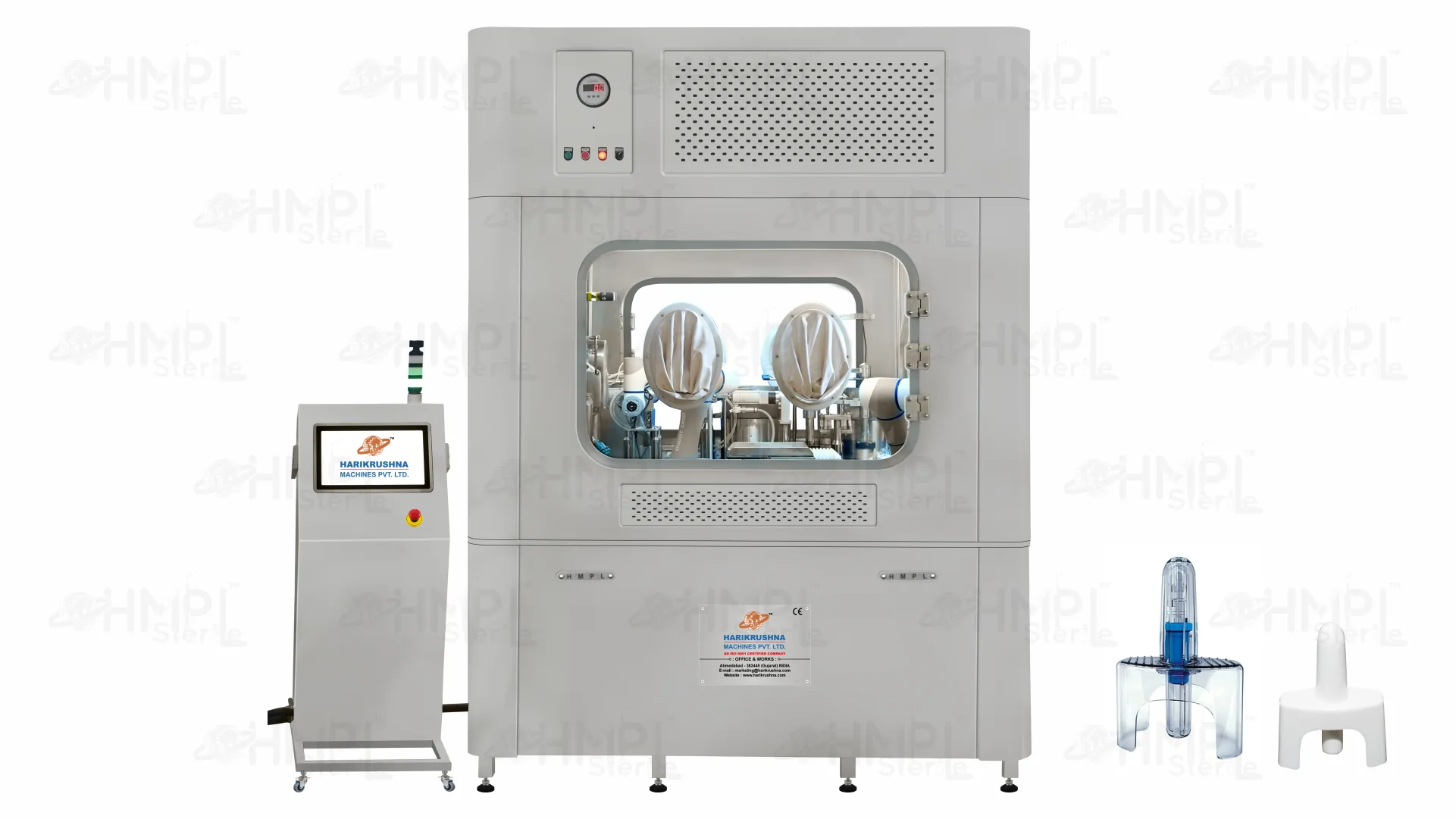
HMPL Sterile introduces the Fully Automatic Robotic Uni-Dose Nasal Spray Filling, Stoppering & Assembly Machine, built for aseptic pharmaceutical packaging.

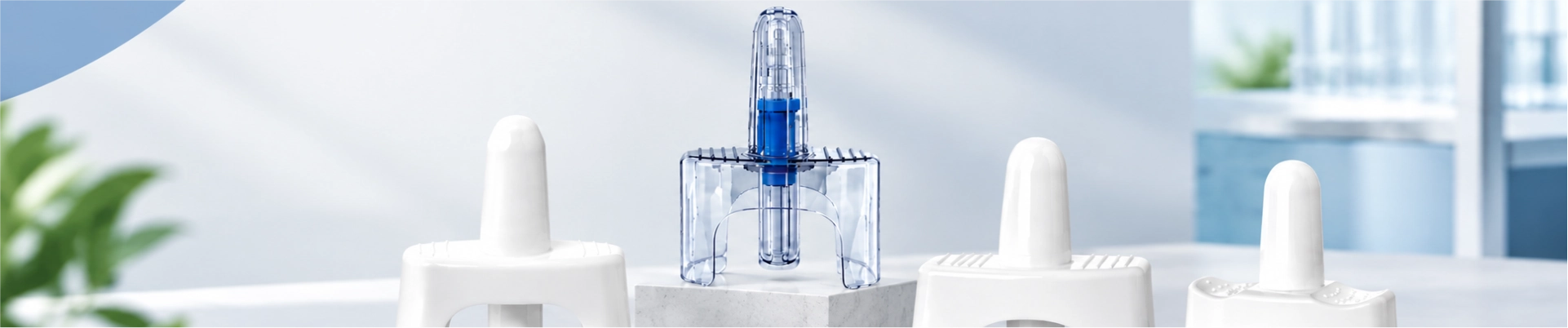
Fully Automatic Robotic Uni-Dose Nasal Spray Filling, Stoppering & Assembly Machine-Banner-1
Fully Automatic Robotic Uni-Dose Nasal Spray Filling, Stoppering & Assembly Machine-Banner-2
Fully Automatic Robotic Uni-Dose Nasal Spray Filling, Stoppering & Assembly Machine-Banner-3
Fully Automatic Robotic Uni-Dose Nasal Spray Filling, Stoppering & Assembly Machine

Fully Automatic Robotic Uni-Dose Nasal Spray Filling, Stoppering and Assembly Machine

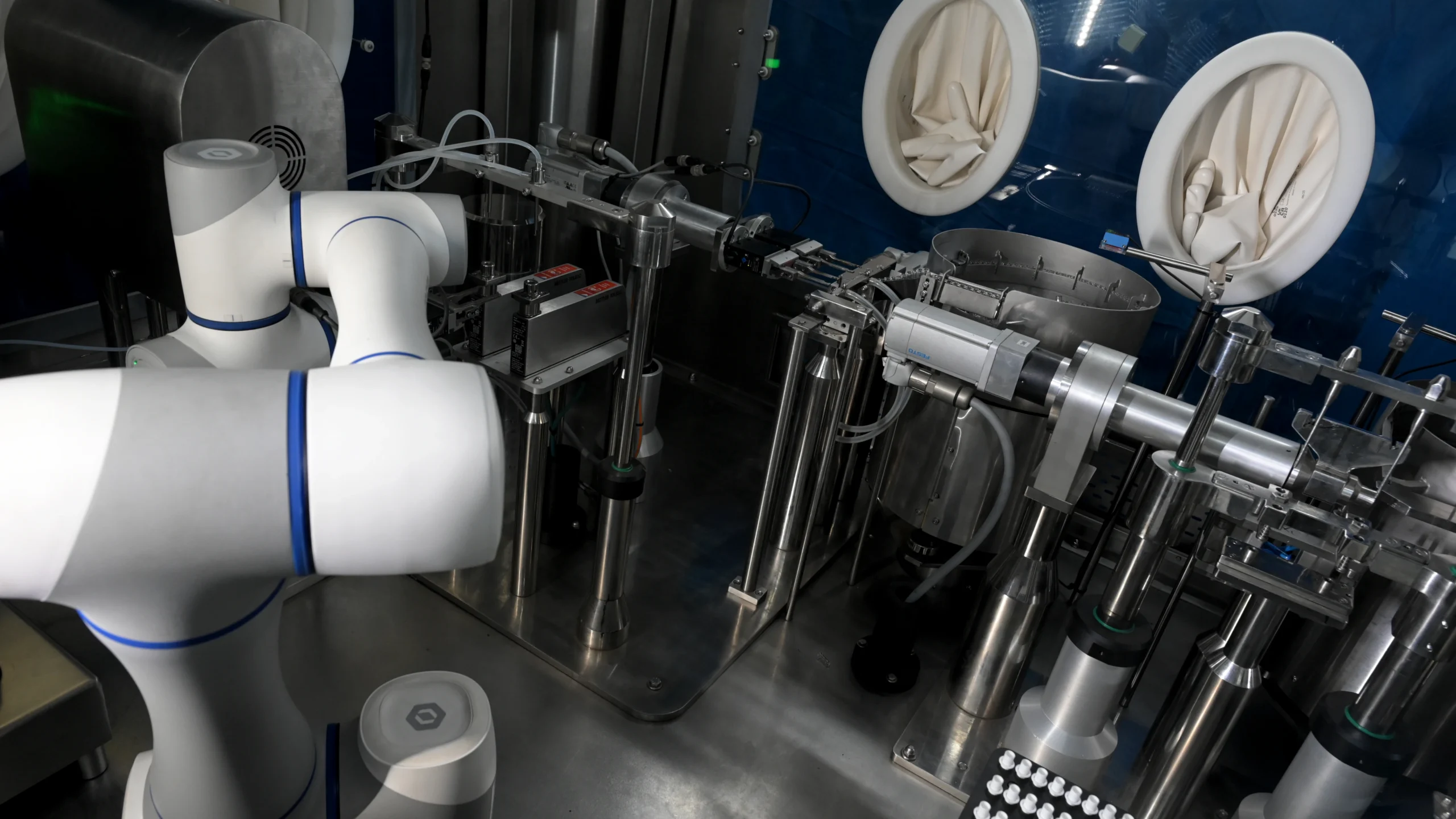
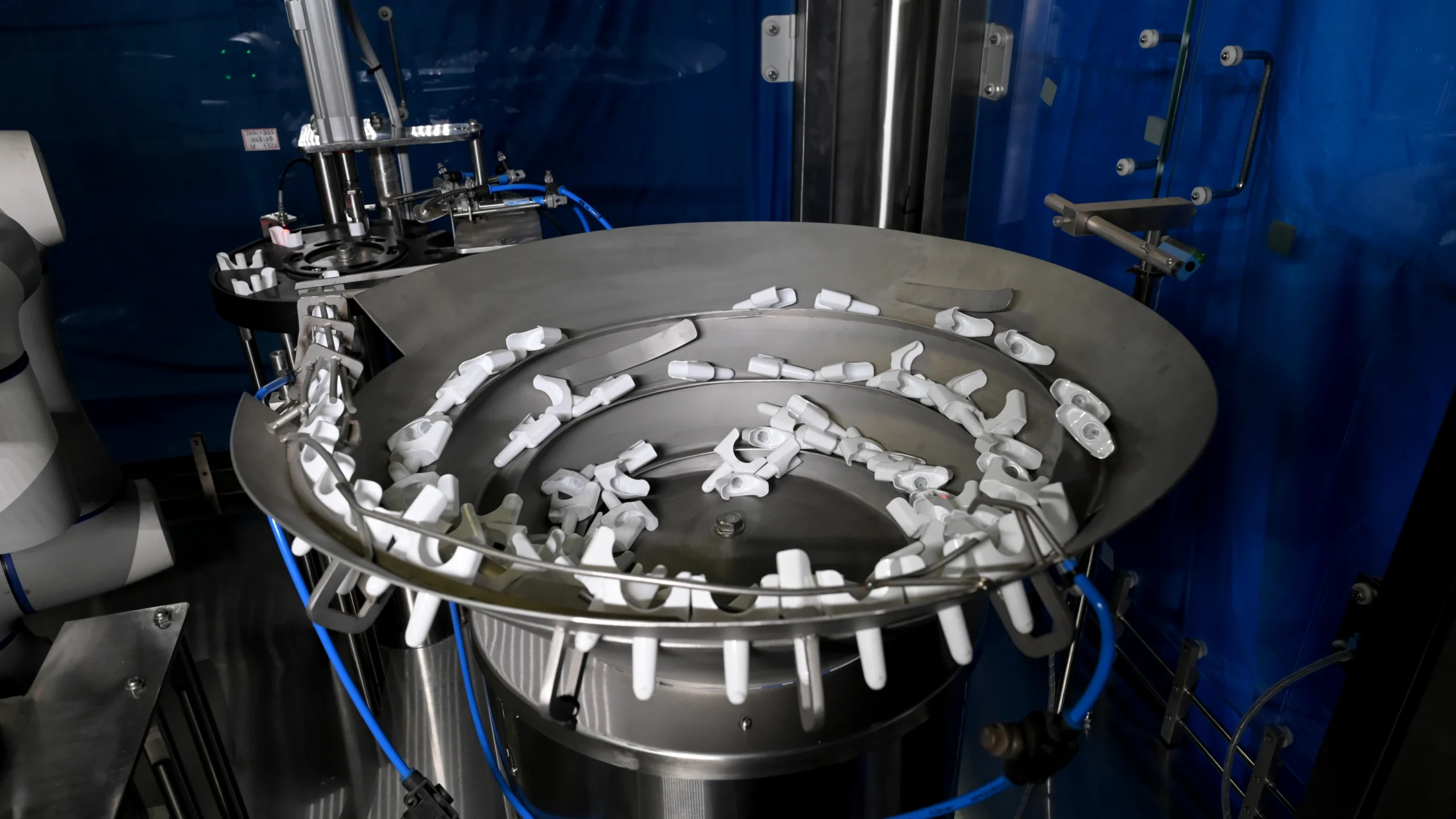
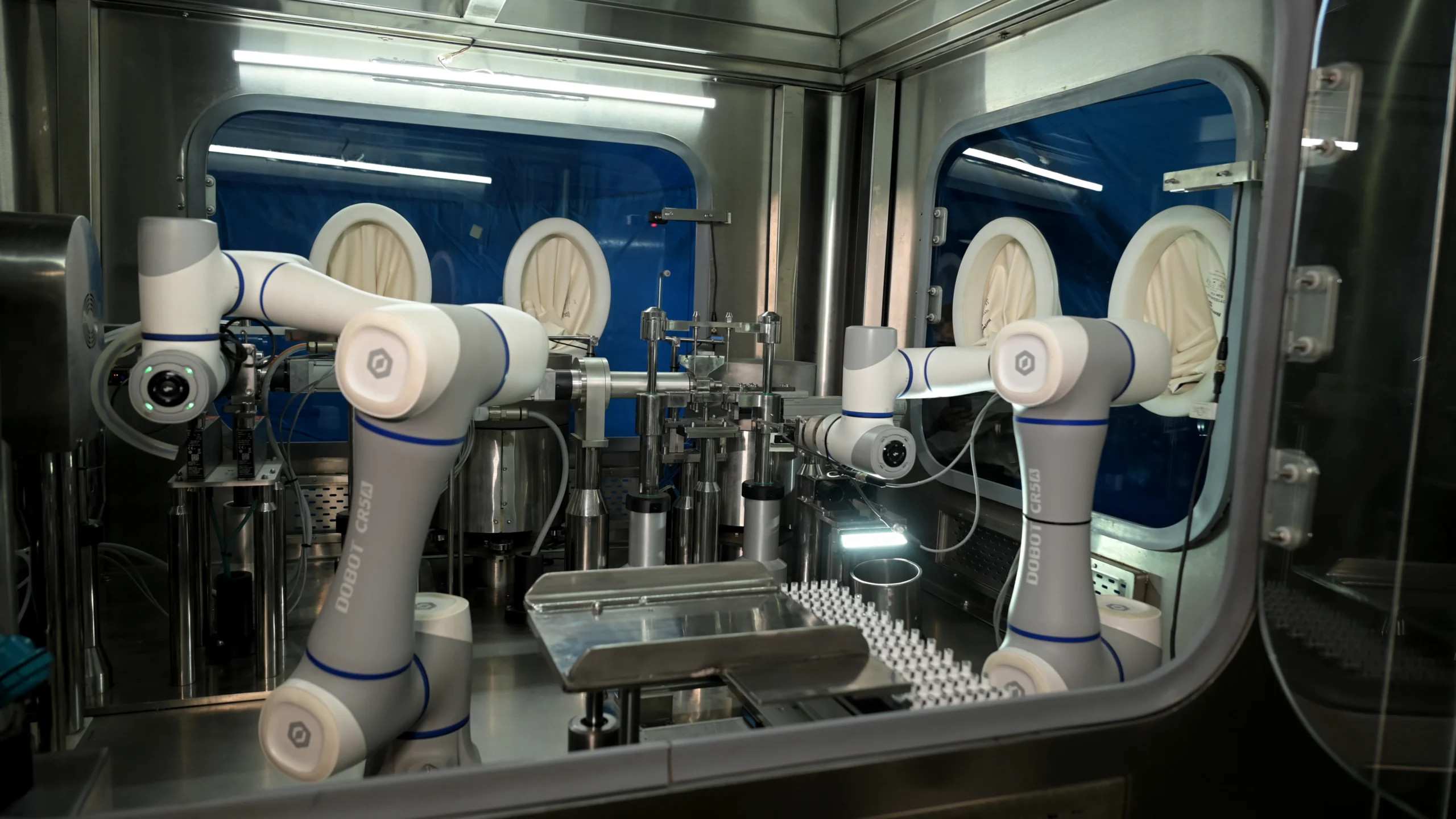
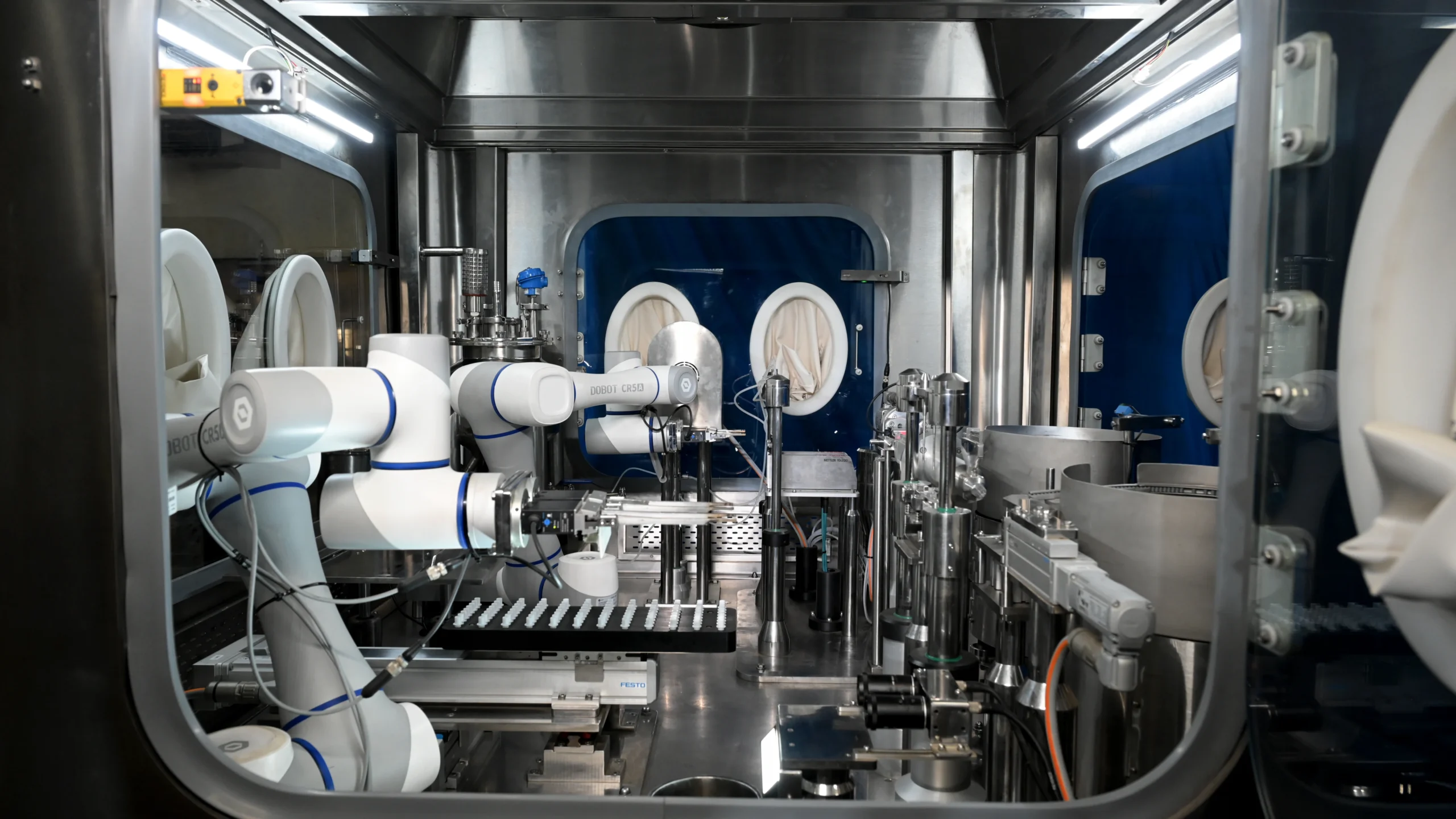
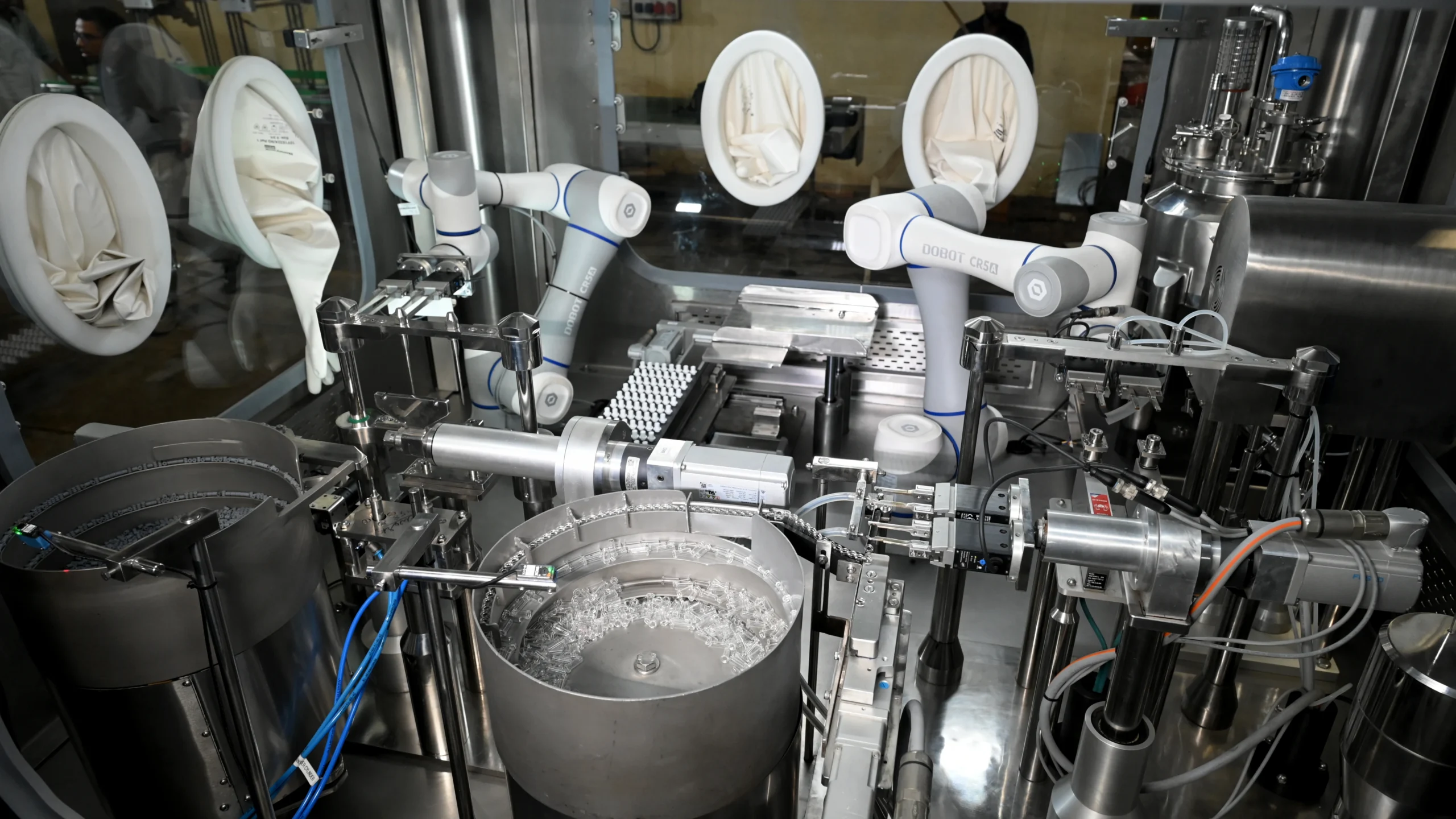
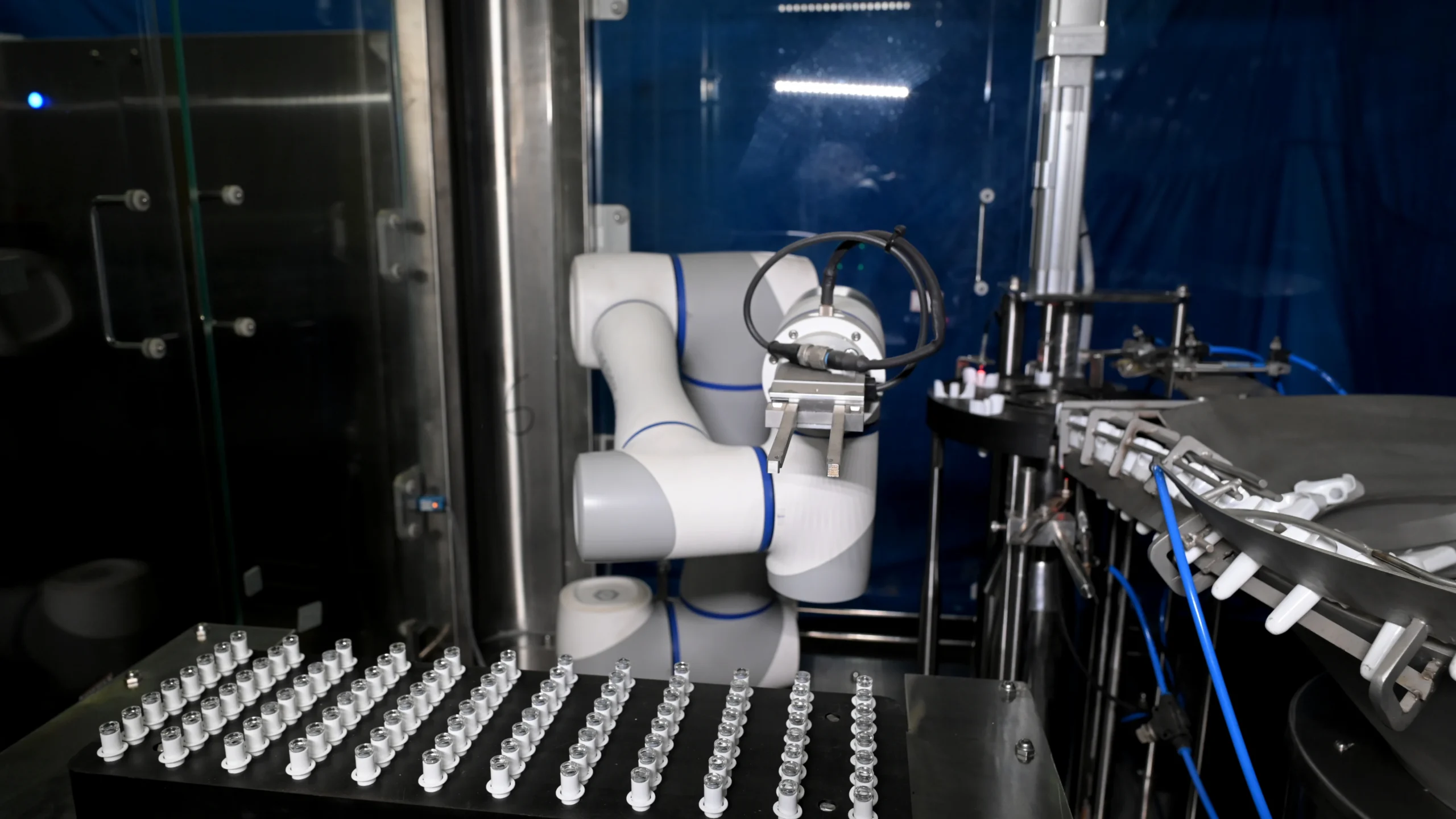
The Fully Automatic Robotic Uni-Dose Nasal Spray Filling, Stoppering & Assembly Machine offers accurate aseptic packaging for single-dose nasal spray products. Moreover, it is the 2nd Robotic Sterile Filling System from HMPL Sterile, and it runs the entire production cycle on its own: vial feeding and cleaning, liquid filling, stoppering, inspection, and final assembly, with no manual intervention.
 
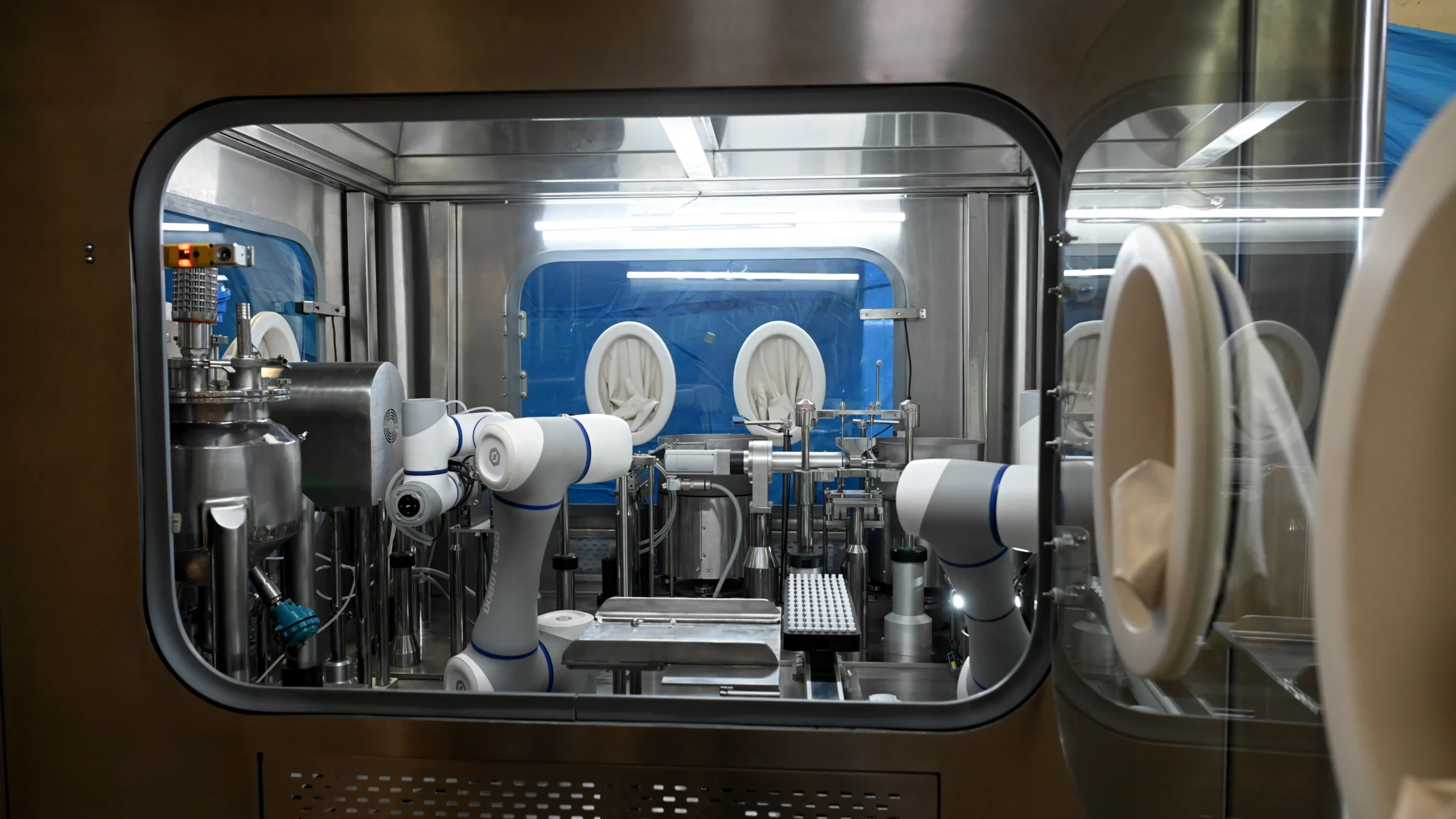
Robotic arms carry out filling, stoppering, and assembly on each unit, and 100% check-weighing confirms that every dose matches its specification. Also, automatic visual inspection spots and rejects faulty units, so only good vials continue to holder placement and locking. As a result, with every stage automated, human contact stays minimal, contamination risk falls, and each batch comes out consistent and safe for patients.
 

What Is a Unidose Nasal Spray?

 
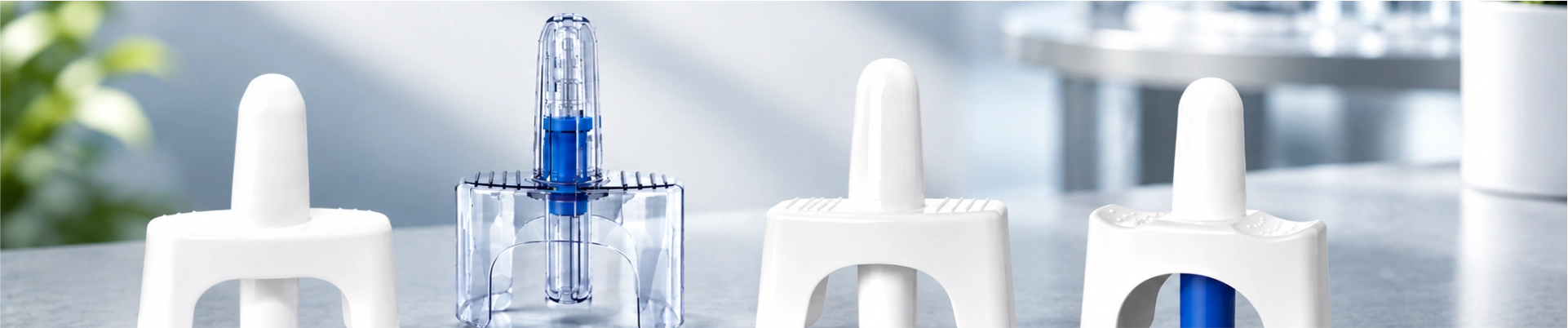
A unidose nasal spray is a single-use, needle-free device that delivers one exact, pre-measured dose. Multi-dose sprays stay in use for weeks, but you open a unidose vial, use it once, and throw it away. Therefore, this format avoids the contamination, dosage drift, and preservative buildup linked to repeated use.
 
Hospitals, emergency responders, and pharmaceutical brands are adopting this format more and more because it is dependable. As a result, every patient receives the same precise dose each time, with nothing to measure or estimate.
  

Why Pharmaceutical Packaging Matters

 
Packaging does much more than contain a product. It protects patients, maintains drug efficacy, and builds confidence in every dose. In particular, accurate filling prevents underdosing and overdosing, aseptic handling keeps contaminants out, and secure assembly means the device works as intended from factory to patient.
 
In addition, automation removes human error from these steps and provides consistency that manual work cannot match. Because a single faulty unit can put a patient at risk or force a costly recall, strong packaging is a vital safeguard for everyone who depends on the medication.


Benefits of the Fully Automatic Robotic Uni-Dose Nasal Spray Filling, Stoppering & Assembly Machine

 
This machine unites speed, precision, and safety in one automated system. For instance, our line eliminates manual handling at every stage, which greatly reduces contamination risk and protects the sterile integrity of each dose. Likewise, 100% check-weighing catches dosing errors on the line before any unit leaves it, so every product meets its specification and regulatory standards.
 
Inspect, Assemble, and Deliver: One Continuous Flow for Safer Doses
 
In addition, automatic visual inspection and rejection add further quality control, making sure only compliant vials reach patients. The machine also improves efficiency by merging filling, stoppering, adapter assembly, and holder locking into a single continuous flow, which shortens production time and lowers labour costs while keeping output steady. In short, for pharmaceutical manufacturers, that means fewer recalls, stronger compliance, and more confidence in each dose that reaches the market.

#ModelOutput Speed
1
HMPL-RUDNFSAM
Up to 200 Units per minute

The machine follows a fully integrated, sequential process:

#ProcessBrief
1
Vial Feeding
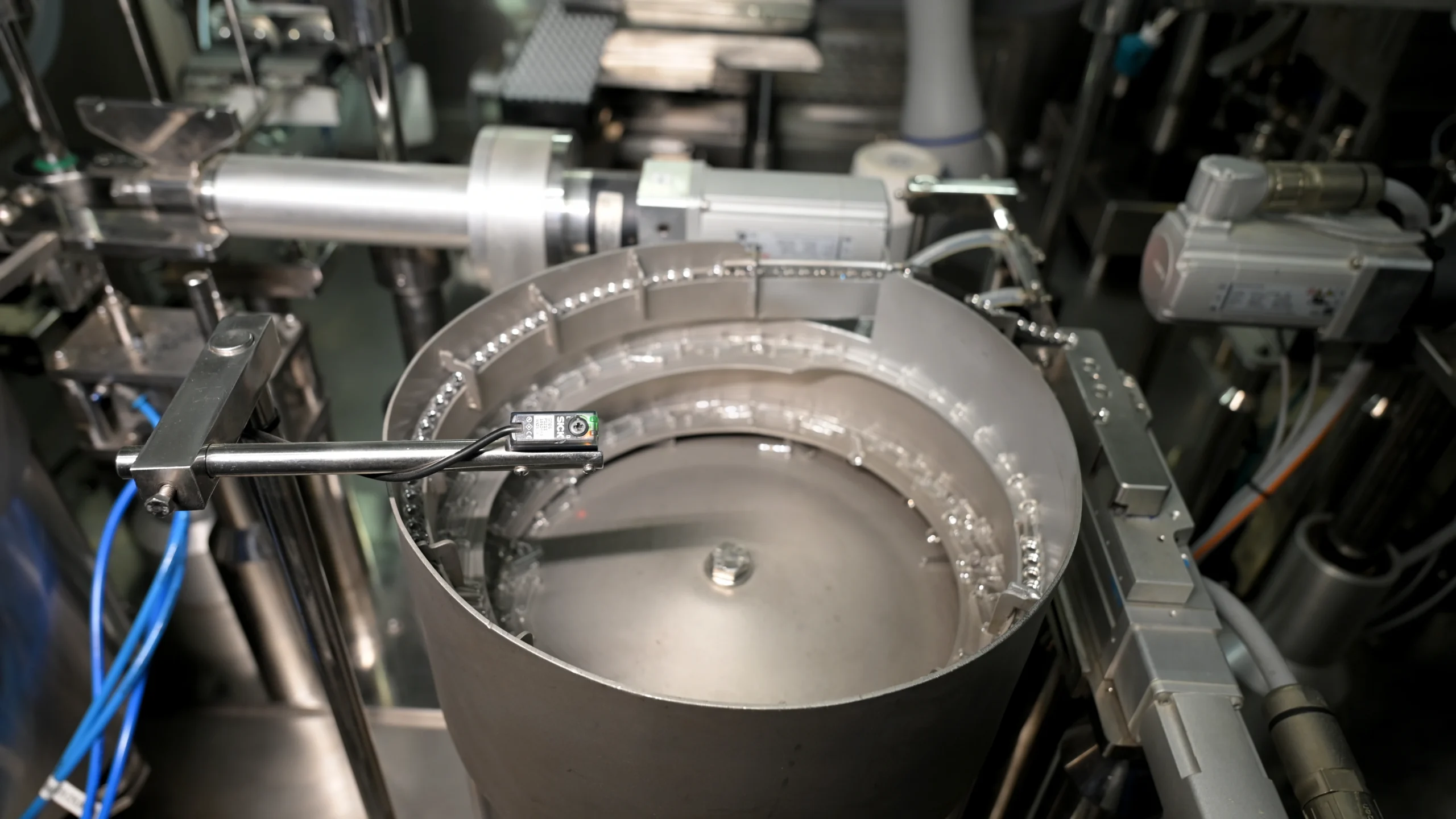
Vials are loaded into the system automatically
2
Vial Cleaning
Vials are cleaned before filling to maintain sterility
3
Liquid Filling with 100% Check Weighing
Every vial gets a precise dose, verified by weight
4
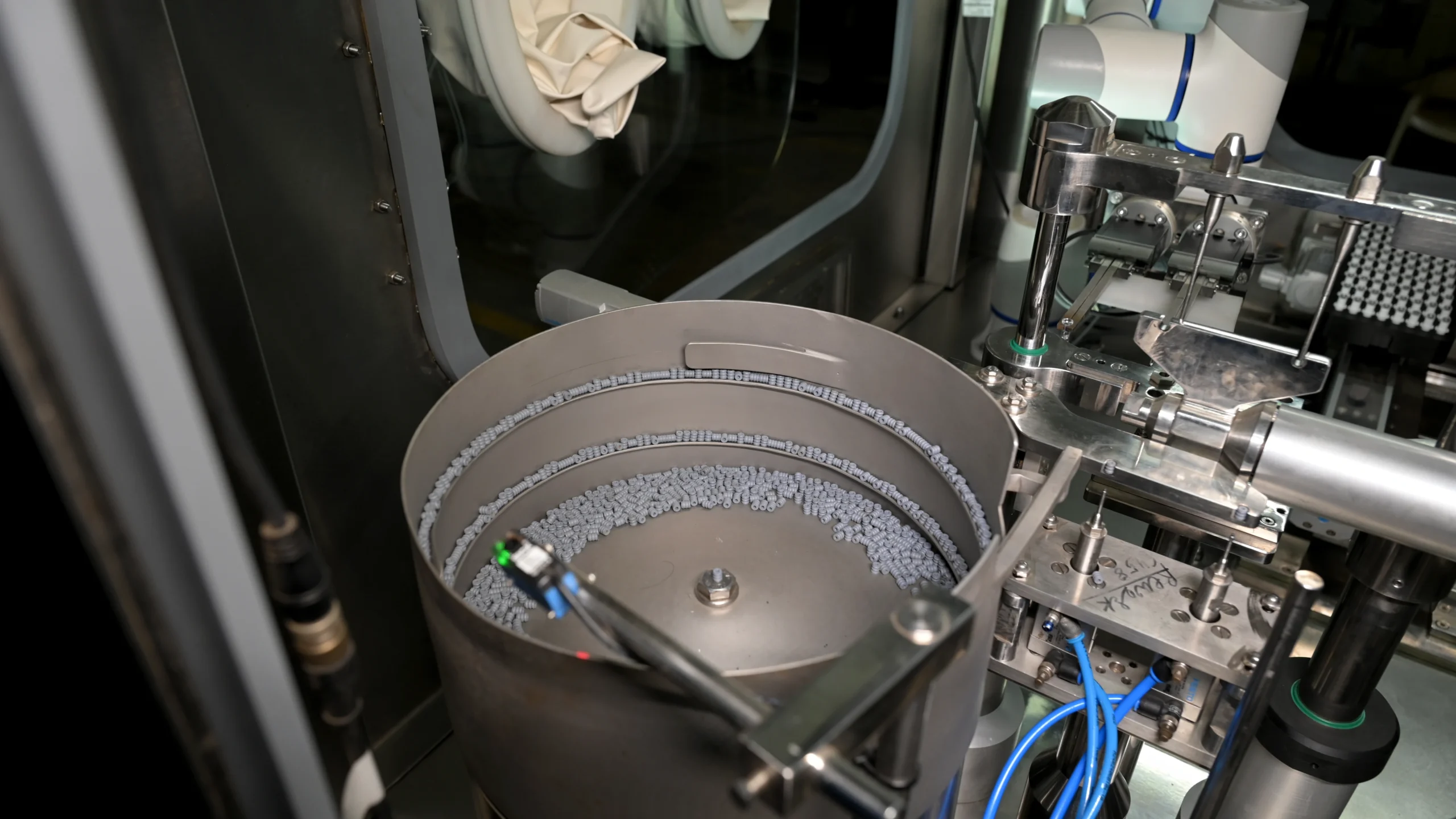
Rubber Stopper Feeding
Stoppers are supplied to the line automatically.
5
Vial Stoppering
Stoppers are seated securely on the filled vials
6
Visual Inspection
Each unit is checked for defects
7
Rejection of Faulty Units
Non-conforming vials are taken off the line automatically.
8
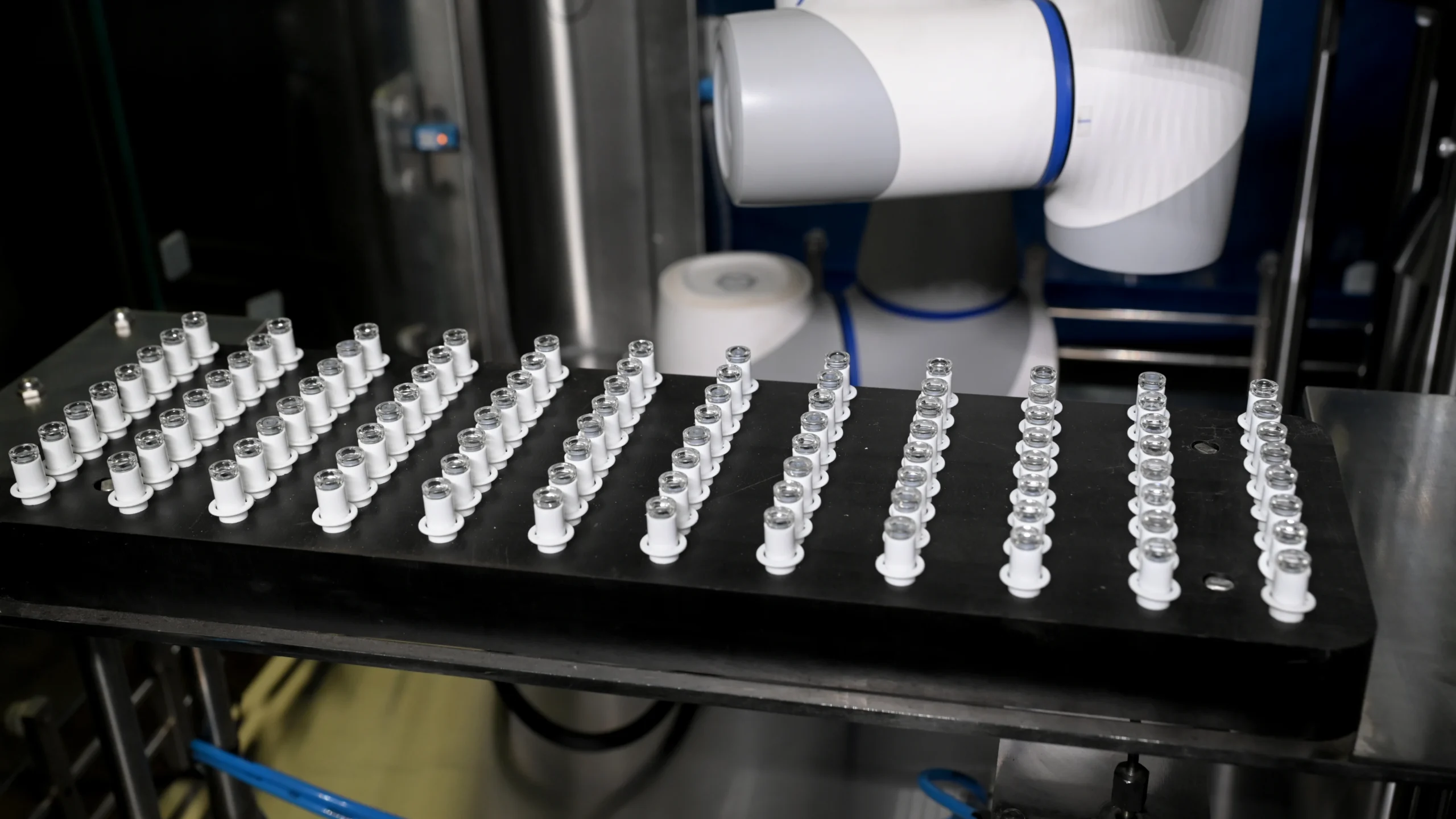
Vial Placing in Holder
Good vials are set into holders
9
Vial Pressing in Holder
Vials are pressed firmly into place.
10
Adapter Assembly
Nasal adapters are fitted to the units
11
Vial Holder Placement
Assembled units are moved into their final holders.
12
Holder Locking
Holders are locked to secure the assembly.
13
Good and Reject Collection
Finished units are sorted into separate collection points


  • Fully automatic, robotic operation with end-to-end processing and minimal manual handling
  • 100% check-weighing of each filled unit to ensure dosing accuracy
  • Integrated visual inspection that automatically rejects faulty units
  • Aseptic, sterile handling across filling and assembly
  • Complete in-line assembly, including filling, stoppering, adapter fitting, and holder locking, in one system
  • Automated good/reject sorting for consistent output quality
  • Designed for uni-dose nasal spray production at pharmaceutical-grade standards
1. What is a uni-dose nasal spray filling machine?
It is a pharmaceutical packaging system that fills, stoppers, and assembles single-use nasal spray vials, each of which delivers one exact, pre-measured dose of medication.


2. How does the Fully Automatic Robotic Uni-Dose Nasal Spray Filling, Stoppering & Assembly Machine ensure dosing accuracy?
The system check-weighs every unit as it fills it, so it confirms each vial’s dose before the vial moves to the next stage.


3. Is this machine suitable for aseptic/sterile pharma production?
Yes. In fact, HMPL Sterile built its 2nd Robotic Sterile Filling System for aseptic handling, and it limits manual contact and contamination risk throughout filling and assembly.


4. What are the main stages of the filling and assembly process?
The stages are vial feeding, vial cleaning, liquid filling with check weighing, stopper feeding and placement, visual inspection, rejection of faulty units, vial placement and pressing in holders, adapter assembly, holder locking, and finally good/reject collection.


5. How does the machine handle defective units?
Each filled and stoppered vial passes automatic visual inspection. Then the line rejects any faulty unit and keeps it apart from good units during collection.


6. What makes this a “robotic” filling system?
Robotic arms perform key tasks such as filling, stoppering, and assembly, so the whole line runs automatically with minimal human involvement.


7. Who should I contact for more details on this machine?
For more information, contact the HMPL Sterile team at marketing@harikrushna.com or visit https://hmplsterile.com/.

Headquarter

Reach out to Syntegon.
india
Vatva Ahmedabad, Gujrat

Phone

+1(365) 567 89 54
+800 350 84 31

Email

info@harikrushna007.com

CONTACT US

Get in Touch With Us!

    loading...